



Basic Medication Use: What to Take, When to Take It and How to Stay Safe
Wrong medications, wrong doses, dangerous combinations — improper drug use kills more than 125,000 people a year in the United States alone. And yet most of these deaths are entirely preventable with basic knowledge. This complete guide answers the most important questions about the most commonly used medications in daily life, travel and emergency situations — clearly, safely and based on evidence.
BARBARA COSTA
4/15/20264 min read


Fundamental Principles Before Any Medication
Every medication is an active chemical substance — there is no such thing as a "weak" or "harmless" drug. Even paracetamol can cause severe liver failure in overdose or combined with alcohol
Dose makes the poison — and the cure — always respect the indicated dosage
Indication matters more than the drug — taking an antibiotic for a viral flu doesn't treat the flu — it only destroys beneficial bacteria and builds resistance
Always report every medication you take — drug interactions are a leading cause of hospitalisation, including supplements and herbal remedies
Never stop antibiotics early — doing so selects for the most resistant bacteria
GROUP 1 — Analgesics and Antipyretics
Paracetamol (Acetaminophen / Tylenol)
Used for: fever, mild to moderate pain (headache, body aches, dental pain), muscle pain
Adult dose: 500 mg to 1g every 6 hours — maximum 4g per day
Child dose: 10–15 mg/kg every 6 hours — always calculate by weight, never by age
Onset of action: 30 to 60 minutes | Duration: 4 to 6 hours
✅ Safe for pregnant women, children and the elderly. Does not irritate the stomach. Can be taken on an empty stomach.
❌ NEVER combine with alcohol — risk of severe liver failure. Overdose is silent and irreversible — symptoms appear too late. Most combined cold and flu medications already contain paracetamol — taking them alongside plain paracetamol is a common accidental overdose.
Ibuprofen (Advil, Motrin, Nurofen)
Used for: fever, pain with an inflammatory component (sprains, tendinitis, cramps, post-surgical, toothache with swelling)
Adult dose: 400 mg every 8 hours — maximum 1,200 mg per day (OTC use) or up to 2,400 mg under medical guidance
Onset: 30 to 60 minutes | Duration: 6 to 8 hours
✅ A true anti-inflammatory — superior to paracetamol when inflammation is involved.
❌ Always take with food — irritates the stomach and can cause ulcers. Avoid with gastritis or peptic ulcer. Contraindicated in dengue fever. Avoid in the third trimester of pregnancy. Can impair kidney function when dehydrated — drink plenty of water.
Metamizole / Dipyrone (Novalgin)
Used for: high fever, moderate to severe pain, spasmodic cramps (unique antispasmodic effect)
Adult dose: 500 mg to 1g every 6–8 hours — maximum 4g per day
✅ Faster onset than paracetamol and ibuprofen (15–30 minutes). Very effective for renal and intestinal colic.
❌ Banned in some countries (US, UK) due to rare risk of agranulocytosis — but widely used and considered safe in Brazil, Spain and much of Europe.
Can I Alternate Paracetamol and Ibuprofen?
Yes — and it's often the best strategy for persistent high fever.
Take paracetamol → wait 3 hours → take ibuprofen → wait 3 hours → repeat
This ensures 24-hour coverage without exceeding the maximum dose of either
Respecting daily limits: paracetamol (4g/day) + ibuprofen (1,200 mg/day)
GROUP 2 — Antibiotics: The Most Misunderstood Medication
The Golden Rule of Antibiotics:
Antibiotics do NOT treat viruses. Flu, common cold and most sore throats and coughs are viral. Taking antibiotics in these cases doesn't speed up recovery — it only destroys beneficial gut flora and creates resistant bacteria.
When Is an Antibiotic Necessary:
✅ Bacterial tonsillitis (white patches on throat with no runny nose), urinary tract infections, bacterial pneumonia, spreading skin infections (cellulitis, erysipelas), infected wounds with systemic signs, bacterial sinusitis (facial pain + purulent discharge for over 10 days).
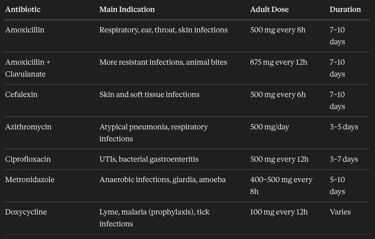
Most Common Antibiotics and Their Indications:
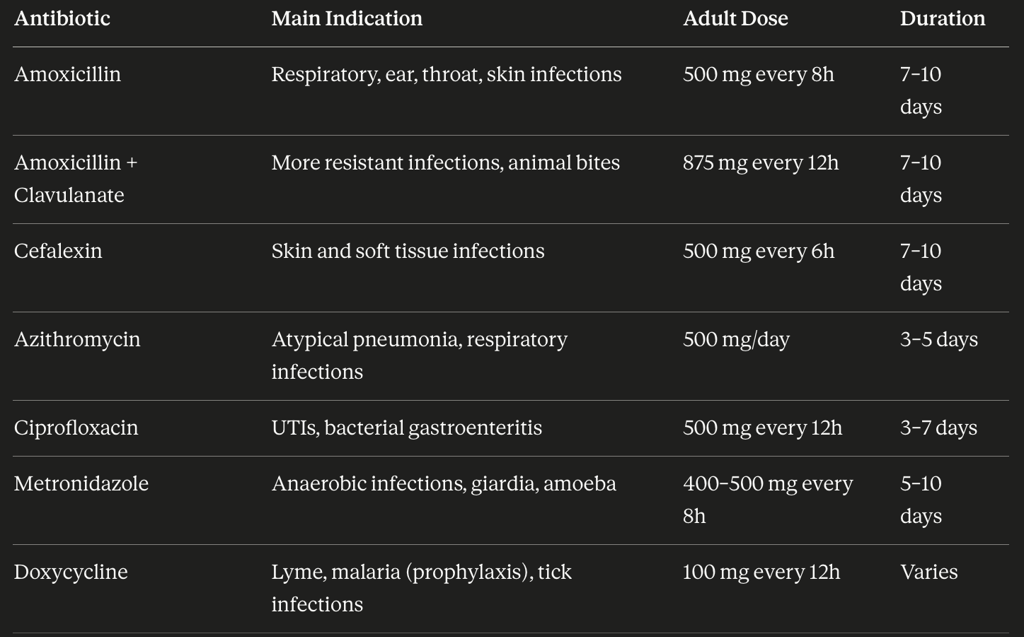
Absolute Rules for Antibiotics:
Complete the full course — even if you feel better
Never share — the right antibiotic for you may be wrong for someone else
Take at correct intervals — timing is as important as dose
Use probiotics during and after the course
🎥 Watch: What you need to know about antibiotics:

GROUP 3 — Digestive System Medications
Omeprazole (20–40 mg on empty stomach): ulcer, gastritis, acid reflux, gastric protection when using anti-inflammatories for more than 3 days.
Loperamide (4 mg initial + 2 mg after each liquid bowel movement — max 16 mg/day): diarrhoea — controls symptoms when hydration is ensured and mobility is required. Never use with high fever or bloody diarrhoea.
Oral Rehydration Salts: 1 litre of clean water + 1 level teaspoon of salt + 2 tablespoons of sugar + lemon juice. Drink 200–400 ml after each episode.
Activated charcoal (25–50g diluted in water): toxic ingestion, toxin-caused diarrhoea. The faster after ingestion, the more effective.
GROUP 4 — Antihistamines and Allergies
Loratadine (10 mg once daily): allergic rhinitis, urticaria, mild to moderate allergic reactions. Non-sedating. Safe for long-term use.
Cetirizine (10 mg once daily): similar to loratadine, may cause mild drowsiness. Excellent for intense itching.
Severe Allergic Reaction (Anaphylaxis) — EMERGENCY
Signs: tongue and throat swelling, severe difficulty breathing, blood pressure drop, generalised hives, dizziness and fainting after allergen exposure.
Emergency treatment: epinephrine (adrenaline) 0.3 mg IM — the only effective treatment. People with a history of anaphylaxis should always carry an EpiPen. Lay victim flat with legs raised. Call emergency services immediately.
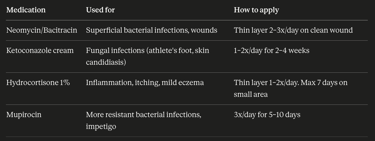
GROUP 5 — Topical Medications (External Use)
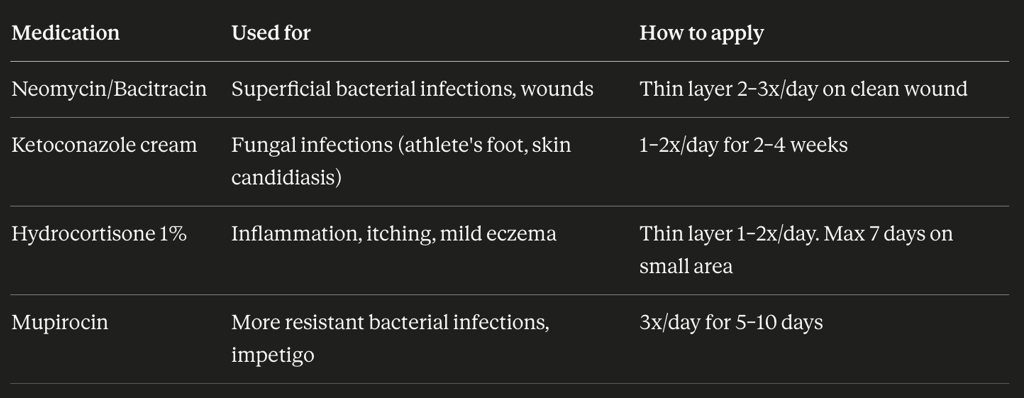
⚠️ Never use topical corticosteroids on: open wounds, fungal or bacterial infections without simultaneous specific treatment, or on the face for more than 7 days without medical guidance.
GROUP 6 — Emergency Medication Kit for Survival
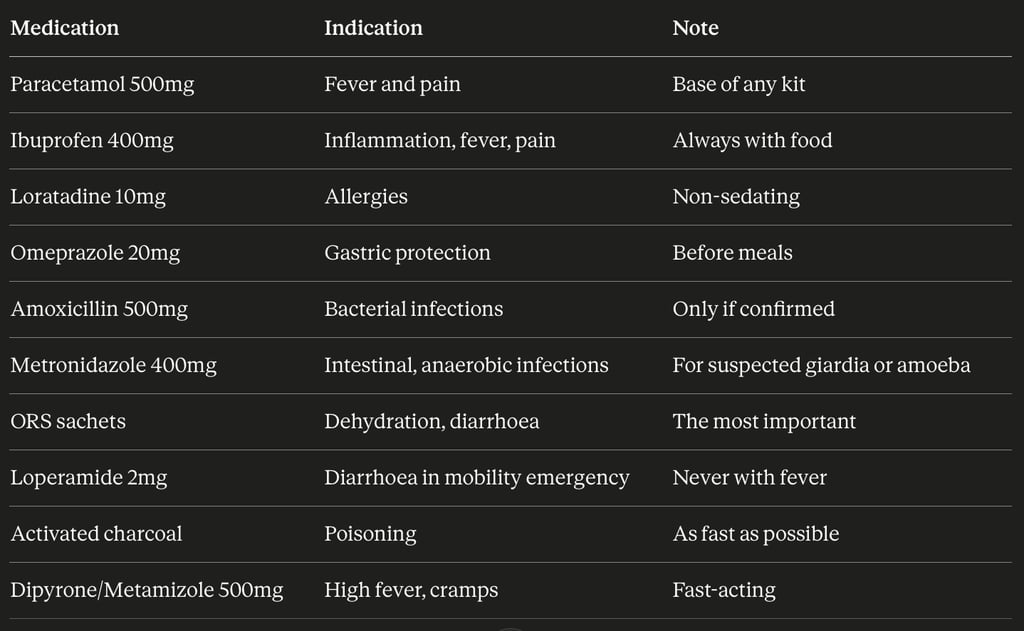
⚠️ Dangerous Drug Interactions to Know
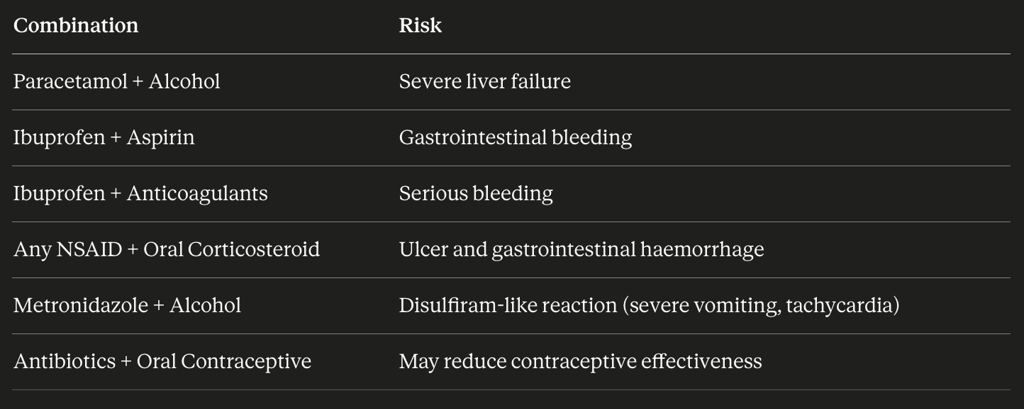
Golden Rules for Safe Medication Use
Read the leaflet — at minimum, the contraindications and dosage sections
Tell your doctor everything you take — including supplements and herbal teas
Never double the dose if you miss one — just take the next scheduled dose
Check expiry dates — especially in emergency kits
Store correctly — away from heat, moisture and direct sunlight
Never crush enteric-coated tablets — the coating protects the stomach or controls release
Never self-medicate antibiotics without medical guidance
💊 The right medication, at the right dose, at the right time — that is what turns chemistry into healing. Share this guide with everyone you care about.
Contact
Contact us for questions or suggestions.
© 2025. All rights reserved.
suportedoisb@gmail.com