


How to Make Fire Without Matches or a Lighter in Any Situation
You're deep in the wilderness, the sun is setting, and you realize you have no matches or lighter. The cold is creeping in, wildlife is nearby, and you need fire — right now. Don't panic. Our ancestors mastered the art of making fire long before any modern tool existed. And so can you. This complete guide will teach you the best techniques to start fire from scratch, in any survival situation.
4/6/20263 min read
Why Is Fire-Making an Essential Survival Skill?
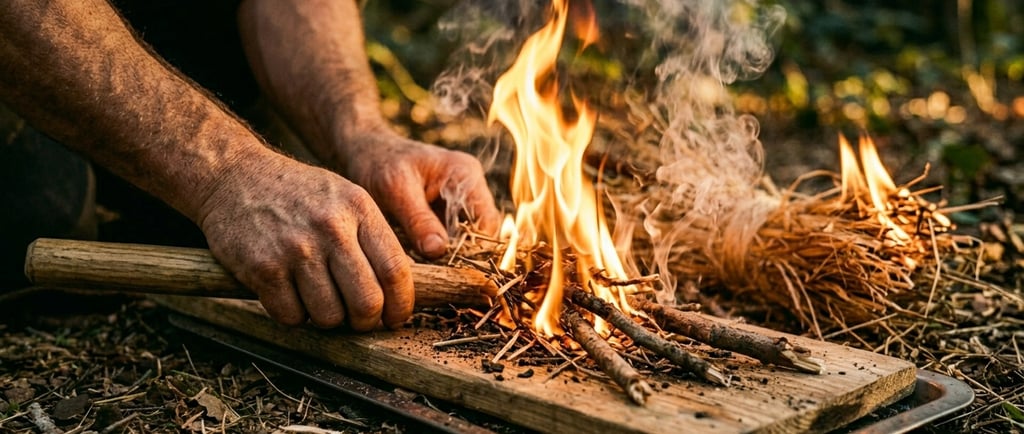
Fire means warmth, safety, cooking food, purifying water, and sending a rescue signal. In extreme situations, knowing how to make fire can literally be the difference between life and death.
Technique 1: Bow Drill — The Most Efficient Method
This is considered the most efficient friction-based technique for beginners. It uses a bow to rapidly spin a wooden drill against a base board, generating heat through friction until an ember forms.
What you need:
1 dry, soft wood fireboard (basswood, willow, cedar)
1 straight, dry stick for the drill
1 curved branch and a cord (vine, shoelace, belt) for the bow
A tinder bundle of dry grass, bark fibers, or dry leaves
Step by step:
Cut a small V-notch in the fireboard
String the bow with the cord wrapped around the drill
Press the drill firmly into the notch
Move the bow back and forth rapidly for 30 to 60 seconds
An ember will form in the notch — transfer it to your tinder bundle
Blow gently until a flame appears
🎥 Watch the full tutorial:

Technique 2: Flint and Steel
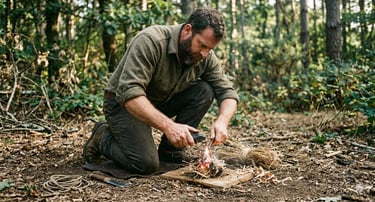
One of the oldest and most reliable techniques in human history. Strike a flint stone against metal to generate sparks that ignite a dry, easily flammable material called tinder.
What you need:
A sharp piece of flint, quartz, or agate
A piece of steel (knife spine, belt buckle, any steel object)
Dry tinder: amadou fungus, birch bark, dry moss, or charred cloth
Step by step:
Place your dry tinder beneath the flint
Strike the steel against the sharp edge of the flint at a 30° angle
Sparks should fall directly onto the tinder
When the tinder catches an ember, blow gently
Wrap the ember in a tinder bundle and blow until a flame appears
Technique 3: Fire Plow
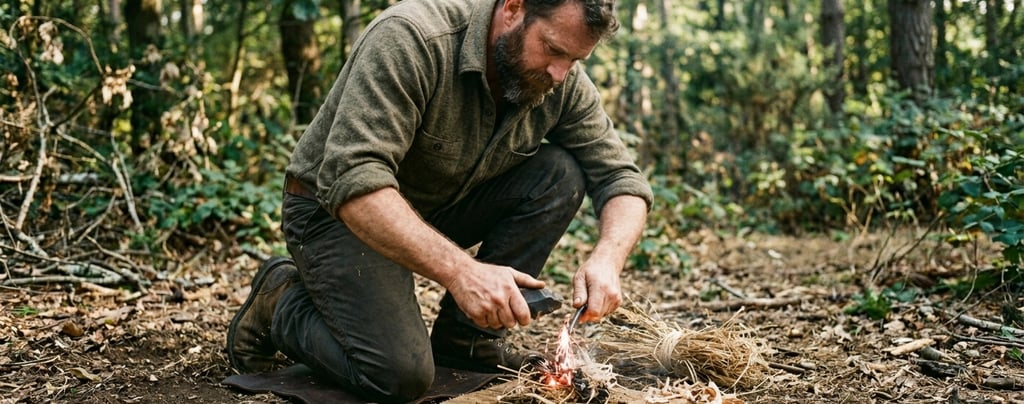
Simpler than the bow drill, the fire plow involves rapidly sliding a dry stick back and forth inside a groove carved into a soft piece of wood.
How to do it:
Carve a straight groove into dry, soft wood
Vigorously rub a stick back and forth in the groove for 1 to 2 minutes
The wood dust collecting at the end of the groove will become an ember
Transfer it to a tinder bundle and blow gently
Technique 4: Solar Concentration
If it's a sunny day, this is by far the easiest and fastest method.
What to use:
Magnifying glass, eyeglasses, bottom of a PET bottle, mirror, polished metal container
Water inside a clear plastic bag works as an improvised magnifying lens
How it works: Focus the sun's rays onto a small spot on dark, dry material. Within seconds, the material will begin to smoke and catch an ember.
🎥 Watch how to use a magnifying glass to start fire:

Technique 5: Battery + Steel Wool
Yes — this works in urban emergency situations or at camp!
Touch both poles of a battery (9V or AA) to the ends of fine steel wool
The electrical resistance heats and ignites the steel wool almost instantly
Use dry paper or grass underneath to catch the flame
Golden Tips for Any Technique
Dry wood is everything. Damp wood almost never works
Prepare your tinder bundle first before attempting to transfer an ember
Shield from wind especially in the early stages
Blow slowly and controlled — a strong gust extinguishes the ember
Practice at home before depending on this skill in the wild
Recommended Emergency Kit
Even knowing all these techniques, it's always smart to carry: a portable firesteel striker, petroleum jelly cotton tinder, and a small waterproof lighter. Preparation is part of survival.
🔥 Now you have the knowledge. The practice is up to you. Share this article with anyone who loves adventure and might need this information someday.
Contact
Contact us for questions or suggestions.
© 2025. All rights reserved.
suportedoisb@gmail.com