


How to Stockpile Food for Emergencies (Step-by-Step Strategic Guide)
Emergencies don’t come with a warning — but they often follow the same pattern: limited food access, disrupted services, and uncertainty. Most people realize this too late. The good news? You don’t need a bunker or a huge budget to prepare.
3/17/20262 min read
⚠️ Why stockpiling food is essential today
Situations that can affect access to food:
Economic crises
Natural disasters
Supply chain disruptions
Conflicts or social instability
👉 The real problem isn’t just “running out of food,” but not having access to it when you need it most.
🧠 1. Define your stockpile goal
Before buying anything, you need to answer:
How long do you want to be prepared for?
3 days (minimum recommended)
7 days (basic safety level)
30 days (strategic level)
How many people?
Adults
Children
Specific needs (diets, restrictions)
👉 Practical rule: always plan for slightly more than you think you’ll need.
🥫 2. Choose the right foods (the most common mistake)
Not every food is suitable for storage.
Prioritize foods that are:
Non-perishable
Easy to prepare
Nutritious
Long shelf life
Strategic examples:
Rice
Beans
Pasta
Canned goods (tuna, sardines, vegetables)
Powdered milk
Oats
Energy bars
👉 Important tip: choose foods you already eat regularly.
💧 3. Water: the most critical item
You can survive weeks without food — but only a few days without water.
Recommended amount:
1 gallon (about 3 liters) per person/day
Minimum stock: 3 to 7 days
Strategies:
Stored bottles
Large containers
Rainwater collection (with proper treatment)
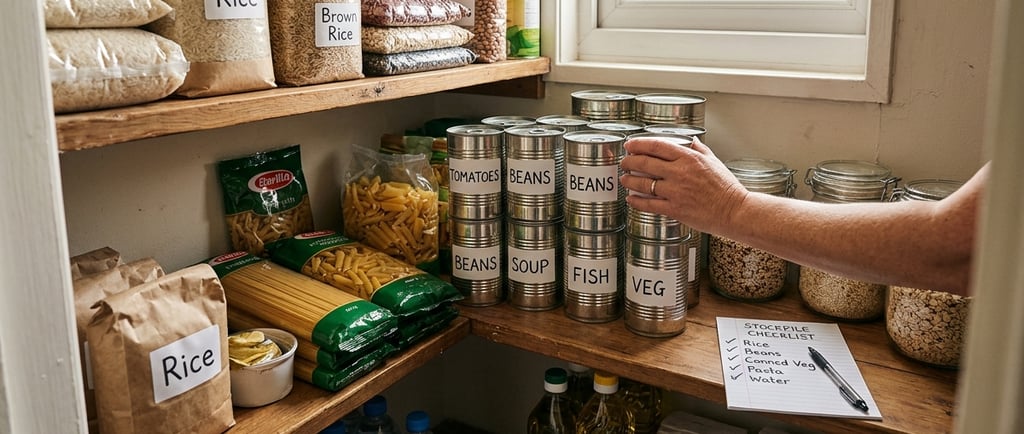
📦 4. How to organize your stockpile properly
It’s not enough to have supplies — you need organization.
Simple and effective method:
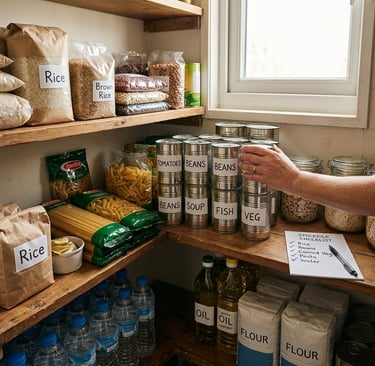
Use shelves or storage bins
Separate by categories (grains, canned goods, liquids)
Keep everything visible
Essential technique:
👉 FIFO (First In, First Out)
Use older items first.
🏠 5. Where to store your food
Storage conditions directly affect shelf life.
Ideal conditions:
Cool environment
No direct sunlight
Low humidity
Good ventilation
Avoid:
Hot kitchens
Areas near chemicals
🔥 6. Think about food preparation
Having food is useless if you can’t prepare it.
Have alternatives:
Portable stove
Extra fuel
Ready-to-eat foods
👉 Include items that require no preparation.
🧂 7. Don’t forget complementary items
Many people overlook these — but they make a big difference.
Include:
Salt
Sugar
Cooking oil
Spices
Coffee or tea
👉 These items improve both usability and comfort during difficult situations.
🔄 8. Rotation and maintenance of your stockpile
Stockpiling is not “store it and forget it.”
Create a system:
Review every 30–60 days
Check expiration dates
Replace what you use
👉 This prevents waste and keeps your stockpile ready at all times.
💰 9. How to build your stockpile on a budget
You don’t need to buy everything at once.
Smart strategy:
Buy gradually (1–2 items per week)
Take advantage of sales
Build your stock progressively
👉 Within a few months, you’ll have a solid supply.
🧠 10. Mindset: preparation without paranoia
Stockpiling food is not overreacting — it’s planning.
The goal is not to live in fear, but to:
Increase security
Reduce dependency
Be ready for unexpected situations
Learning how to stockpile food for emergencies is one of the smartest decisions you can make today.
With organization, strategy, and consistency, you create a system that protects you and your family during critical moments.
👉 Start now:
Choose 5 basic foods
Define a storage space
Take the first step
Your future self will thank you.
Contact
Contact us for questions or suggestions.
© 2025. All rights reserved.
suportedoisb@gmail.com