



Shelter: How to Protect Yourself from Cold, Heat, Wind and Rain in Any Situation
Fire warms you. Water hydrates you. But without shelter, neither one lasts long enough to save you. Exposure to cold, extreme heat, wind and rain can kill within hours — long before hunger or thirst. Hypothermia, heatstroke, wind-accelerated dehydration — the environment is merciless when you're unprotected. Knowing how to build a fast, efficient shelter using what nature provides is one of the most critical survival skills you can learn. This complete guide covers every shelter type, when and how to build each one, and how to protect yourself from every kind of extreme weather.
4/8/20264 min read
The Golden Rule Before Building Any Shelter
Before you start gathering branches, remember the three location priorities:
Protection from the elements — never build on open plains, hilltops or dry riverbeds
Proximity to resources — close to water, firewood and building material, but not so close you attract wildlife
Visibility for rescue — if lost, build where you can be spotted from above (clearing, field)
A poorly positioned shelter can be just as dangerous as no shelter at all.
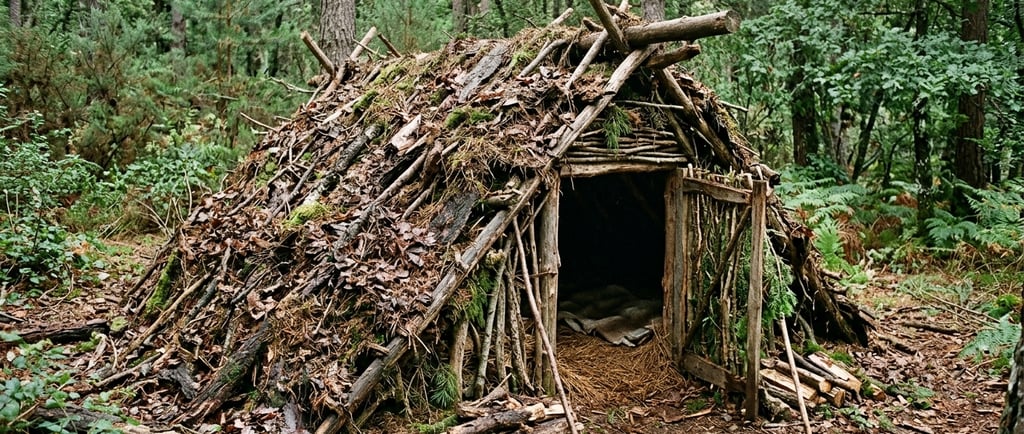
Debris Hut
The debris hut is the most thermally efficient survival shelter for a single person. It uses dry leaves, branches and vegetation as natural insulation, retaining body heat surprisingly well — even in near-freezing temperatures.
Best for: intense cold, unexpected night in the wild, no equipment
What you need:
1 long, strong branch (twice your height) for the ridgepole
Smaller branches for the sides
Large amounts of dry leaves, moss, grass, ferns
Step-by-step construction:
Rest the ridgepole in a tree fork about 1 metre off the ground
Lean smaller branches against both sides to form a ribbed skeleton
Cover the entire structure with thick layers of leaves (minimum 60 cm thick)
Create an internal bed of tightly packed dry leaves
Block the entrance with a bundle of branches or pile of leaves
The internal space should be snug — the smaller, the warmer
Rule of thumb: if the leaf pile isn't thicker than your outstretched arms, it won't be warm enough.
🎥 Watch: How to build a debris hut:

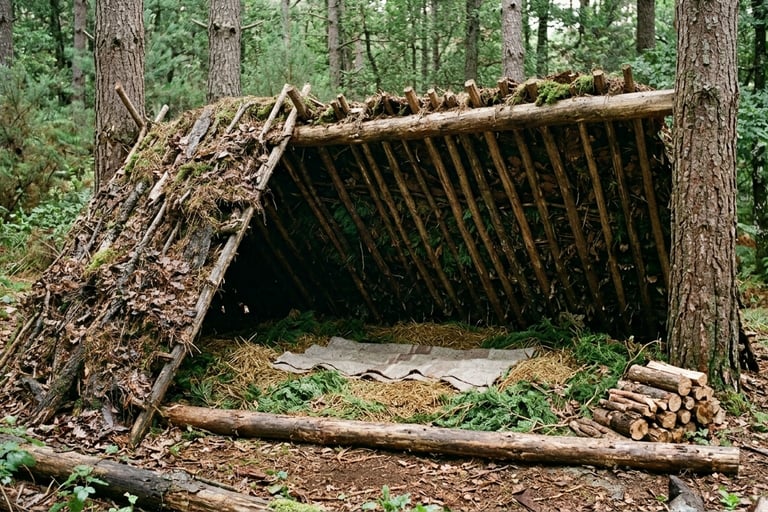
Lean-To Shelter
The lean-to is quick to set up, versatile and excellent for rain and wind. It acts as an angled wall that deflects the elements while you stay dry and sheltered beneath.
Best for: rain, side wind, quick camp setup with or without equipment
With a tarp:
Tie a rope between two trees at shoulder height
Drape the tarp over the rope and stake the lower edges to the ground
Adjust the angle based on wind direction — opening always facing away from the wind
Without equipment (natural materials):
Lash a horizontal branch between two trees
Lean long branches against it at a 45° angle
Weave smaller branches horizontally between them
Layer densely with leaves, ferns and bark (applied bottom to top like roof tiles)
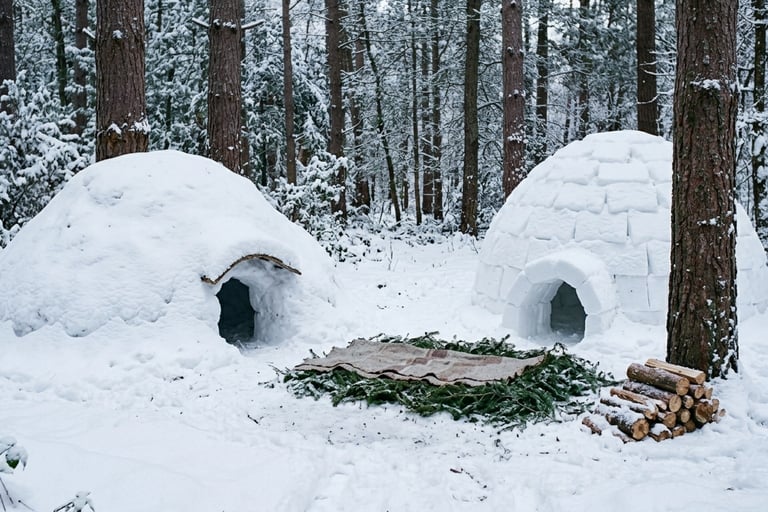
Snow Shelter (Quinzhee)
When snow is abundant, it stops being your enemy and becomes your ally. Snow is an outstanding thermal insulator — the interior of a snow shelter can be 20 to 30°C warmer than the outside air.
Best for: extreme cold with available snow
How to build a quinzhee:
Pile snow into a mound about 2 metres high and 3 metres in diameter
Insert 20 cm branches evenly across the entire surface as thickness guides
Wait 2 hours for the snow to sinter (harden)
Dig an L-shaped entry tunnel (to trap warm air inside)
Hollow out the interior until you hit the branches — that's your ideal 20 cm wall thickness
Poke a small ventilation hole at the top with a stick
Line the floor with insulating material (branches, leaves, backpack)
Critical warning: never sleep in a snow shelter without a ventilation hole — risk of CO₂ asphyxiation.
Heat Shelter
Extreme heat is just as deadly as extreme cold. Heatstroke, dehydration and burns are real threats. The goal here is shade, airflow and ground insulation.
Core principles:
Never lie on sun-exposed ground — soil surface can reach 60–70°C
Elevate your rest at least 30 cm above the ground
Orient the shelter to catch the prevailing breeze
Double-layer covers (air gap between them) insulate far better against solar heat
Solar tarp shelter:
Set the tarp at an angle — higher side facing the morning sun
Leave sides open for air circulation
Use leafy branches as additional cover — green vegetation is a natural solar insulator
In the desert:
Build shelter before sunrise or at sunset — physical exertion in extreme heat is lethal
Use vehicle shade if available
Dig a trench 60 cm deep — ground temperature drops dramatically with depth
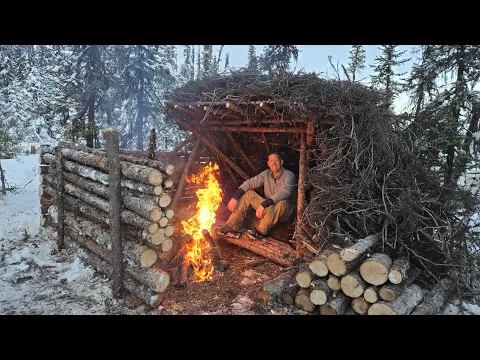
🎥 Watch: Survival shelters for any climate:
Protection from Heavy Rain
Constant rain is one of the greatest survival threats — it rapidly drops core body temperature and destroys poorly built shelters.
Essential waterproofing tips:
Leaf layers must be applied bottom to top (like roof tiles) so water runs off
Wide leaves (fern, palm, banana) are the most effective
Dead tree bark can work as natural roofing tiles
Never set up shelter in a depression — guaranteed water pooling
Elevate the internal sleeping area with logs or packed leaves
Drainage trench: Dig a shallow U-shaped channel around the base of your shelter to divert rainwater before it enters.
Golden Rules for Any Shelter
Size works in reverse — smaller = warmer in cold; larger = cooler in heat
Ground insulation matters more than the roof — you lose more heat to the ground than to the air
Build before you need it — don't wait for the cold or rain to arrive
Test your shelter if you have time — get inside and check the temperature before you sleep
Signal your shelter — bright cloth, coloured leaves or a stone X on top if you need rescue
Minimum Shelter Kit for Any Backpack
Emergency mylar blanket (gold/silver) — weighs under 100g, reflects 90% of body heat
Paracord (30m) — frames any shelter structure
Lightweight folding stakes
Ultralight sleeping bag or emergency blanket
Waterproof duct tape
🏕️ A good shelter is the difference between an adventure and a tragedy. Share this guide with everyone who loves the outdoors — it could save a life.
Contact
Contact us for questions or suggestions.
© 2025. All rights reserved.
suportedoisb@gmail.com