



Water: How to Find, Filter and Purify It in Any Situation
You can survive weeks without food. Without water, you have just 3 days — and far less in intense heat or with high physical exertion. Water is the number one resource in any survival situation. But not all water is safe. Drinking contaminated water can cause diarrhea, infections, parasites and even death. That's why knowing how to find, filter and purify water is a skill that could save your life.
4/7/20263 min read
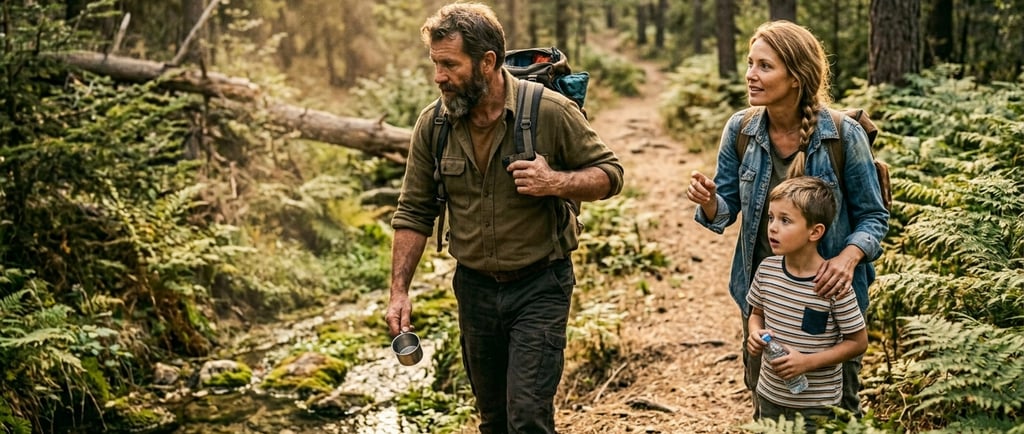
How to Find Water in the Wild
Follow the Terrain
Water always flows downhill. If you're on high ground, descend toward valleys, depressions and greener areas. Dense vegetation, especially willows and cottonwoods, signals nearby surface or groundwater.
Signs that water is nearby:
Dense green vegetation amid a dry landscape
The sound of running water (even far away)
Insects like mosquitoes and gnats (annoying, but useful)
Animal trails — they usually lead to water
Birds circling at dawn or dusk
Alternative Water Sources
Dew: Before sunrise, drag an absorbent cloth or clothing across vegetation. Collected dew can yield hundreds of millilitres per hour.
Rain: Use tarps, large leaves or any container to catch rainwater.
Plants: Young bamboo contains internal water. Bromeliads collect water between their leaves.
Condensation: In coastal or foggy areas, stretch a net or plastic sheet between trees overnight to collect droplets.
Moist soil: Dig in damp areas, near dry riverbeds or at the base of cliffs. Water often pools just centimetres below the surface.
🎥 Watch: How to find water in the wilderness:

How to Filter Water in the Wild
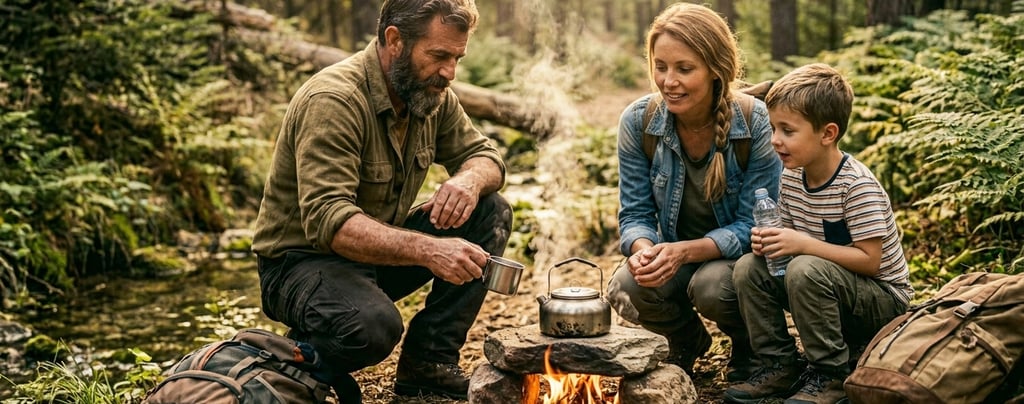
Filtering removes visible particles, sediment, mud and some contaminants. Filtering is not the same as purifying — after filtering, you must still purify to eliminate bacteria and viruses.
DIY Bottle Filter (Most Efficient)
What you need:
1 PET bottle cut in half (or wide bamboo)
Charcoal (from a dead fire, crushed)
Fine sand
Gravel or small stones
Cloth, moss or dry grass as a pre-filter
Assembly (top to bottom):
Cloth/grass layer (pre-filter for large particles)
Gravel layer (filters rocks and debris)
Fine sand layer (filters smaller particles)
Thick layer of charcoal (filters toxins, improves taste)
More fine sand at the base
Let water flow slowly through the filter
Charcoal is the most important ingredient — it absorbs toxins, heavy metals and dramatically improves the taste and smell of water.
Cloth Filter
In a quick emergency, pass water through several layers of folded fabric. This removes coarse sediment but is not sufficient alone — always combine with purification.
How to Purify Water
Purification eliminates bacteria, viruses and protozoa. It is the most critical step to ensure water is safe to drink.
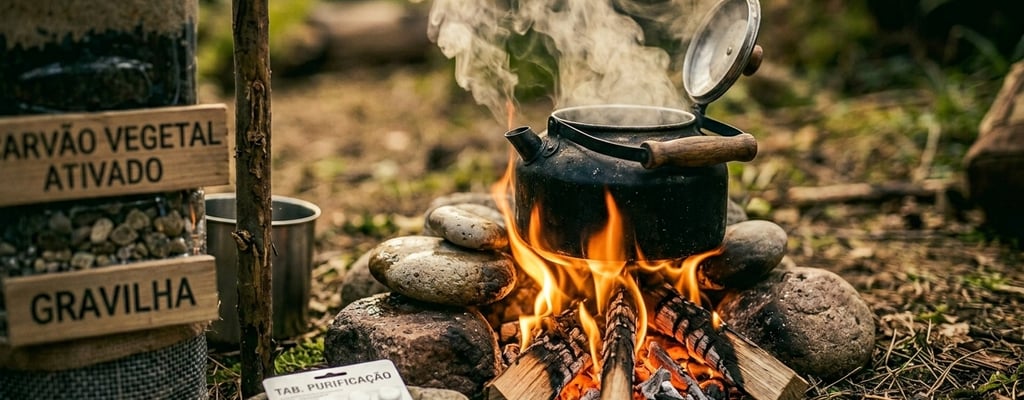
Method 1: Boiling — The Most Reliable
Boiling eliminates virtually all known pathogens.
Boil water for at least 1 minute (above 2,000m altitude, boil for 3 minutes)
Let it cool naturally in a clean, covered container
No pot? Heat large stones in a fire and drop them into a water-filled container
Method 2: Purification Tablets
Lightweight, cheap and easy to use — perfect for any emergency kit.
Add 1 tablet per litre of filtered water
Wait 30 minutes before drinking (60 minutes if the water is cold or cloudy)
Chlorine dioxide tablets are more effective against Giardia and Cryptosporidium
Method 3: SODIS (Solar Disinfection)
Works in sunny regions when no other option is available.
Use clean, transparent PET bottles
Fill with already-filtered water
Leave in direct sunlight for 6 hours (or 2 full days if overcast)
UV radiation inactivates most pathogens
Method 4: Unscented Bleach (Sodium Hypochlorite)
In urban emergencies, unscented household bleach can be used.
Bleach at 2.5% chlorine: 8 drops per litre
Bleach at 5% chlorine: 4 drops per litre
Mix well and wait 30 minutes
Water should have a faint chlorine smell — if not, repeat the process
🎥 Watch: How to purify water in extreme situations:

Water Sources to NEVER Drink
Seawater (improvised desalination is extremely difficult)
Water with a strong smell of chemicals or petroleum
Water with unusual colour (orange, red, dark green)
Stagnant water with heavy algae or foam
Water from rivers near mining or industrial sites
Water Emergency Kit
Essential items that fit in any backpack:
Chlorine or iodine purification tablets
Portable filter like LifeStraw or Sawyer Squeeze
Collapsible water containers
Clear plastic bag (rain collection + SODIS)
Microfibre cloth (dew collection + pre-filter)
Water is life. Knowledge is survival. Share this article with anyone who loves camping, hiking or simply wants to be prepared for any situation.
Contact
Contact us for questions or suggestions.
© 2025. All rights reserved.
suportedoisb@gmail.com