



Decision-Making Under Pressure: How to Think Clearly When It Matters Most
January 2009. US Airways Flight 1549 has just lost both engines shortly after takeoff from New York. Captain Chesley "Sully" Sullenberger had less than 3 minutes to decide what to do with 155 people on board. No option to return to the airport. No accessible alternate runway. No precedent in civil aviation history. He chose to land on the Hudson River. Everyone survived. What Sully did in those 3 minutes wasn't luck. It was the result of decades of training, a clear mental model, and the ability to make effective decisions under maximum pressure — without freezing, without panicking, without wasting time on irrelevant information.
BARBARA. COSTA
4/21/20265 min read
What Happens to the Brain When Deciding Under Pressure
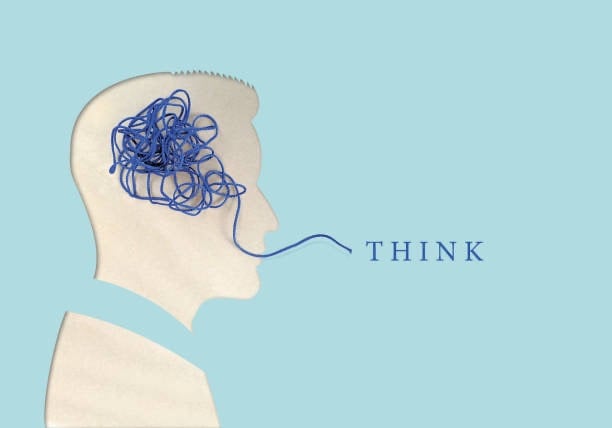
Psychologist Daniel Kahneman describes two thinking systems:
System 1 — Fast, intuitive, automatic: operates effortlessly. Recognises patterns, generates instant responses, works in milliseconds.
System 2 — Slow, deliberate, analytical: logical reasoning, analysis of options, planning. Requires time, attention and cognitive resources.
The Stress Problem
Under severe stress, cortisol and adrenaline inhibit System 2 — analytical thinking. The brain enters cognitive economy mode and relies almost exclusively on System 1 — patterns, habits and automated responses.
This explains why:
Trained people make better decisions in crises — training engraved correct patterns into System 1
Untrained people tend to freeze or make impulsive decisions
Decision quality under pressure is almost entirely determined before the crisis, not during it
Fundamental conclusion: you don't rise to the level of your expectations in a crisis. You fall to the level of your training.
🔄 FRAMEWORK 1 — The OODA Loop: The World's Most Used Decision Tool
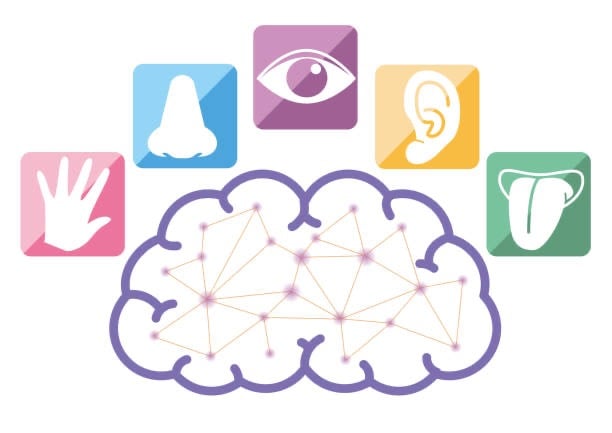
Developed by US Air Force Colonel John Boyd, the OODA Loop is the most widely adopted decision-making model used by military forces, fighter pilots, emergency services and crisis executives worldwide.
O — OBSERVE Collect raw information from the environment. What's happening? What do you see, hear, feel? What data is available? What's missing?
Most common mistake: deciding with insufficient information or acting on unverified assumptions.
O — ORIENT Process the information through your filters — prior experience, mental models, training, values. Make meaning of what you observed. This is the most important and most underestimated step in the loop.
D — DECIDE Choose a course of action from available options. Not the perfect option — the best available option right now with the information you have.
Most common mistake: seeking the perfect decision while time passes and options close.
A — ACT Execute the decision with total commitment. Half-committed execution produces the worst of both worlds.
After action, the loop restarts — you observe the result and adjust.
Why the OODA Loop Is So Effective:
Iterative — doesn't try to predict everything, only reacts faster than reality changes
Adaptive — each cycle incorporates new information
Whoever cycles faster wins — in combat, in business and in survival
Breaks analysis paralysis — removes focus from perfection and places it on action
🎥 Watch: How to use the OODA Loop in crisis situations:

FRAMEWORK 2 — Pattern Recognition (RPD): How Experts Decide
Psychologist Gary Klein studied how firefighters, emergency doctors and military personnel make decisions in the field. His finding was surprising:
Experts rarely compare options. They recognise patterns.
When a veteran firefighter enters a burning building and feels "something is wrong," they're not doing a conscious risk analysis. They're recognising a pattern inconsistent with previous experience — the different sound, the strange smoke colour, the unusual fire behaviour.
How to use this in practice:
Build a pattern library — study survival situations before you need them
Trust trained intuition — if something "feels wrong" after relevant experience, take it seriously
Question untrained intuition — instinct without adequate training can be bias or fear in disguise
The first viable option is often the best — don't wait for the ideal option when the situation is evolving
⚠️ The 8 Cognitive Biases That Kill Crisis Decisions
1. 🔒 Confirmation Bias
You seek and accept information confirming what you already believe. Antidote: actively ask — "What would prove I'm wrong?"
2. 🎭 Anchoring Bias
The first information received disproportionately anchors all subsequent analysis. Antidote: "What if that number is wrong? How would it change my plan?"
3. 🚪 Sunk Cost Bias
You continue a wrong path because you already invested time, energy or resources in it. Antidote: "What would I do if I were starting fresh right now?"
4. 🐑 Groupthink
In groups, people tend to agree with the dominant position to avoid conflict — even when they privately disagree.Antidote: explicitly designate a "devil's advocate" — someone whose role is to challenge the dominant decision.
5. ⏱️ Urgency Bias
Under time pressure, you make hasty decisions just to "do something." Antidote: consciously pause for 10 to 15 seconds before any irreversible action.
6. 🎯 Overconfidence Bias
You overestimate your ability to assess situations and predict outcomes. Antidote: always consider the worst plausible scenario.
7. 🖼️ Tunnel Vision
Under extreme stress, attention narrows and you stop perceiving important peripheral information. Antidote: build the habit of regular "environment scans" — deliberately look around every 2 to 5 minutes in any crisis situation.
8. 💫 Normalisation of Deviance
You gradually accept abnormal conditions as normal because the situation deteriorated slowly. Antidote: compare the current situation to the initial state, not to yesterday.
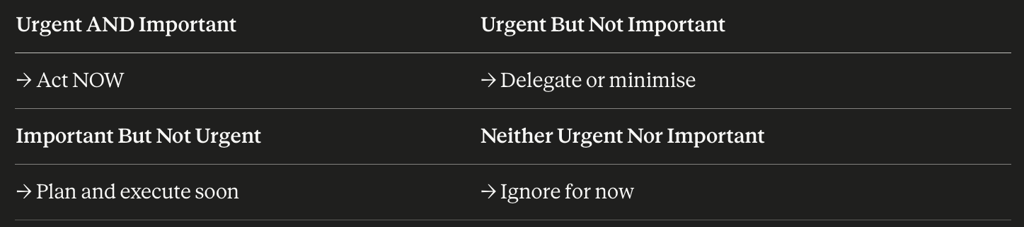
🚑 FRAMEWORK 3 — Mental Triage: Prioritising Multiple Problems
In situations with multiple simultaneous problems — which is standard in real emergencies — mental triage is the process of classifying problems by urgency and impact before acting.
FRAMEWORK 4 — The 3-Second Model
Developed by combat instructors and emergency responders:
Second 1 — Recognise: What's happening? What is the most immediate threat? Second 2 — Choose: What is the best available action now — not perfect, available? Second 3 — Act: Execute without hesitation. Total commitment to the decision taken.
Hesitation after a decision is more dangerous than a slightly inferior decision executed with conviction.
📊 Breaking Analysis Paralysis
1. Accept imperfection — a "good enough" decision executed now almost always beats a "perfect" decision executed too late.
2. Use the 10/10/10 test — proposed by writer Suzy Welch:
How will I feel about this decision in 10 minutes?
In 10 months?
In 10 years?
3. Set a deadline — "I will decide in 2 minutes with the information I have." Artificial deadlines break indecision loops.
4. Choose reversibility — when undecided between options, prefer the most reversible one. Preserve the option to change course.
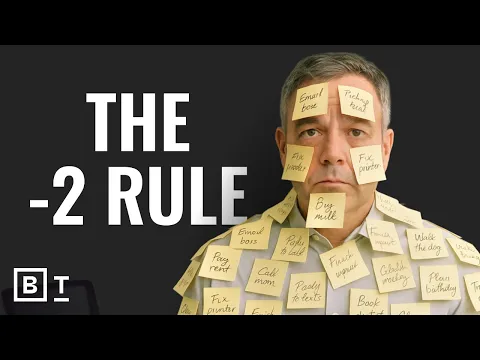
🎥 Watch: How to make better decisions under pressure:
🤝 Group Decision-Making Under Pressure
1. Define a clear decision leader — crisis decisions by committee are slow and frequently paralyse.
2. Information flows up, decision flows down — everyone contributes information, one decides, everyone executes.
3. Disagreement before, commitment after — any member can and should challenge the decision before it's made. After the decision, all execute with total commitment — even those who disagreed.
4. Brevity over completeness — "Left trail, 200 metres, shelter" — not a full explanation. Details later.
🔁 The Debrief: Learning After the Crisis
The military debrief — simple and powerful:
What was expected to happen?
What actually happened?
Why was there a difference?
What will we do differently next time?
Running this process after simulations, drills or real situations dramatically accelerates the development of decision-making competence.
🧭 The 7 Golden Rules of Decision-Making Under Pressure
Imperfect action beats paralysed perfection — decide with what you have
Observe before acting — 10 seconds of observation can be worth hours of correction
Name the biases — awareness of bias reduces its impact
Prioritise before acting — the urgent is not always the important
A decision taken with conviction is more effective than a "correct" one executed with doubt
Preserve reversibility whenever possible — keep options open
Run the debrief — every decision is training for the next one
🎯 The best decisions under pressure are not made in the moment of pressure. They are built over years of preparation, practice and reflection. Share this guide — better decisions save lives.
Contact
Contact us for questions or suggestions.
© 2025. All rights reserved.
suportedoisb@gmail.com